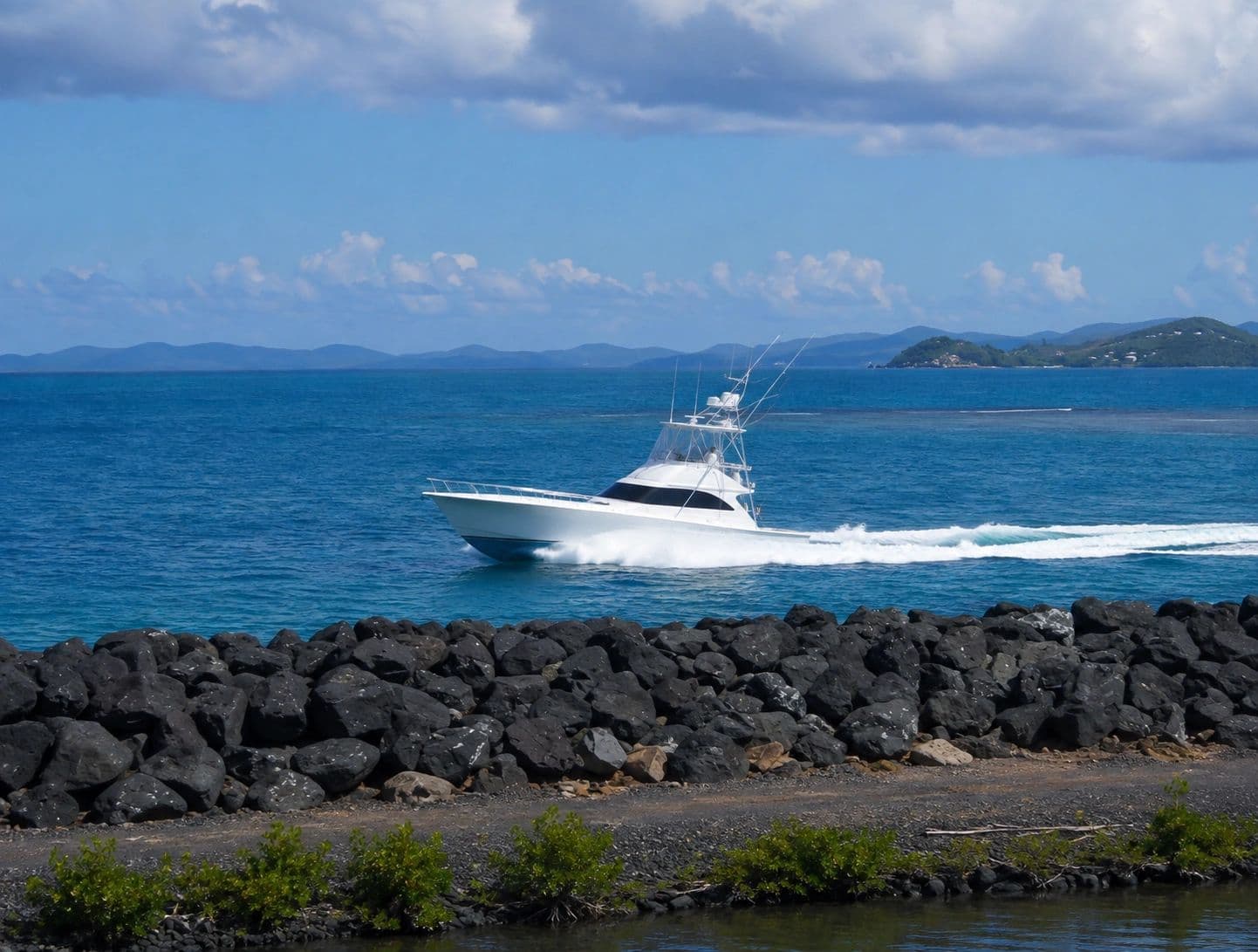
Planning, insurance, documentation, weather windows and the choice between running it by water or shipping it aboard a vessel, for boats heading to Puerto Rico.
You found the boat. Maybe it is a center console in St. Thomas, or a cruiser in a Florida marina at a price you couldn't find at home. Now it needs to get to Puerto Rico, safely and without surprises. The move is very doable, but it rewards planning. Here is what we walk every owner through before a delivery.
Two ways to move a boat
By water, a licensed captain and crew run the boat to its new home. From the U.S. Virgin Islands this is often the natural choice: St. Thomas to Fajardo is roughly 35 to 45 nautical miles, depending on the marinas, and a well-prepared boat can usually do it in a day. From Florida it is a very different trip. The route to Puerto Rico is around 1,000 nautical miles through the Bahamas and past Hispaniola, with fuel stops, overnight stays and stretches of open ocean that call for the right boat and an experienced crew.
Aboard another vessel, the boat travels as cargo. Smaller boats can go on a trailer or cradle with the cargo lines that sail between Florida and San Juan, and larger yachts can travel on dedicated yacht-transport ships. It costs more in some cases and depends on sailing schedules, but it puts no hours on your engines and avoids a long offshore passage. For many boats under about 30 feet, or boats that were never designed for open ocean, it is the safer choice.
Start with a plan, not a date
A good delivery plan covers the route, fuel range and fuel stops, marinas for each night, crew flights, the boat's condition, paperwork and, above all, weather. Fix the date first and you end up forcing the weather to fit it. Build the plan first and pick the date inside a safe window.
Before the boat moves
- A recent survey or a sea trial, so you know the boat's real condition
- Engines serviced, with spare filters, impellers and belts aboard
- Safety gear in date: life jackets, flares, fire extinguishers, EPIRB if required
- Working VHF, chartplotter and navigation lights
- Title, bill of sale and registration or documentation, originals or certified copies
- Insurance confirmed in writing for the delivery itself
Insurance: ask before you sign
Your policy needs to cover the boat during the move, not just once it is in its new slip. Ask your insurer three questions: does the policy's navigation area include the full route, does it cover a professional delivery captain (some policies require naming the captain), and, if you ship the boat, is it covered while it is cargo? Shipping often needs separate cargo or transit coverage. Get the answers in writing before the boat leaves the dock.
Documentation, customs and registration
Paperwork is where most delays happen. Keep the title or USCG documentation, the bill of sale and the current registration together and easy to reach. The U.S. Virgin Islands sit outside the U.S. customs territory, so a boat arriving in Puerto Rico from the USVI generally has to report its arrival to U.S. Customs and Border Protection. Boats coming from Florida, or stopping in the Bahamas or the Dominican Republic on the way, have their own reporting steps.
Once the boat is here, it will need to be registered in Puerto Rico through the DRNA unless it is federally documented, and there may be Puerto Rico taxes or fees when a boat is brought to the island. Ask your broker or accountant early so it doesn't catch you by surprise.
Requirements change. Always check the current rules with U.S. Customs and Border Protection, the U.S. Coast Guard and the DRNA before the trip. This article is general guidance, not legal or customs advice.
Weather windows
Atlantic hurricane season runs from June 1 to November 30, and long deliveries are best planned outside its peak. In winter, cold fronts push north swells into the region, and the strong trade winds around December and January, the Christmas winds, can make eastbound legs rough for days at a time. A professional captain watches the forecast for days before departure, leaves only in safe conditions and is ready to wait. A delayed departure is an inconvenience; a forced one is a risk.
Follow every mile
Every Seawise delivery comes with a private live-tracking link, so you can see your boat's position, speed and arrival time from your phone, with photo updates from the captain along the way, and a final delivery report when it arrives.
Planning a delivery?
Tell us about your boat and route. We'll recommend the safest method and send a clear, itemized quote.